The Team
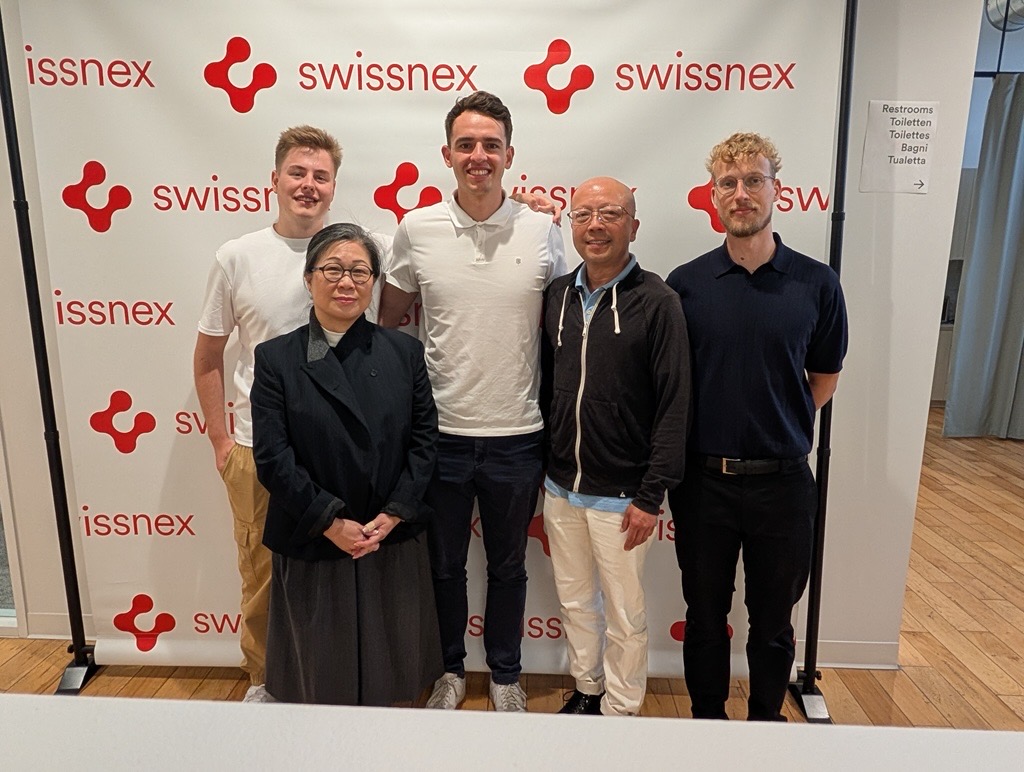
Left to right: Alex Ziegler, Darlene Chiu Bryant (Project Provider), Andri Rupp, Carlos Serrano Quan (Project Provider), Yannick Konrad
The Project
Living in a city of millions of people in the United States, you quickly notice one of the biggest problems its residents face: air pollution. It was this problem that led Carlos and Darlene, our project providers, to set themselves an ambitious goal — building an ecosystem around emission-free vehicles.
The technology already exists. Hydrogen is well-known and proven in China, but largely unapplied in the US market. At the same time, the State of California has introduced regulatory changes requiring parts of the public and municipal vehicle fleets to go emission-free. The problem: the ecosystem to support this regulation doesn’t exist yet. We’re talking about fueling infrastructure, manufacturers, suppliers, investors, government — all the pieces that need to come together before a single truck can run.
That’s where our project and our team came in. Over six weeks, we built the business plan, drew up an ecosystem strategy, and prepared the materials for investor pitch decks — turning Carlos and Darlene’s vision into something concrete that fleets, partners, and investors could act on.
The Experience
From a project standpoint, this was hands-on in a way that changed how we think about our education. All the knowledge we’d built up in school suddenly turned into something meaningful and solid — applied to a real problem, with real stakeholders, real stakes. Experiencing the startup spirit of Silicon Valley firsthand was something we couldn’t have dreamed of before stepping into it. Looking back, all of us are glad we took the chance and went for this international project experience.
From a personal standpoint, it was a trip with friends — a chance to experience another way of life in a country where everything is bigger and better. Arriving there, we quickly learned not everything was better, but it sure was bigger ;D
Project Log
Week 1
Kickoff with Carlos and Darlene, full clarification of the problem and scope. Started the stakeholder analysis for the California hydrogen market.
Week 2
Deepened the stakeholder analysis and completed research on the California Hydrogen Ecosystem. Built the initial structure for the business plan.
Week 3
Analyzed failed competitors (Nikola, Hyzon, Quantron) and compared BEV vs. hydrogen. Laid the groundwork for the compliance guide and demand forecast.
Week 4
Completed Business Plan Version 1. Built the compliance guide and the California Hydrogen Ecosystem graphic, prepared for the investor presentation in San Francisco.
Week 5
Finalized the demand forecast and investor one-pager. Built pitch and teaser decks for investors, government, and fleet buyers.
Week 6
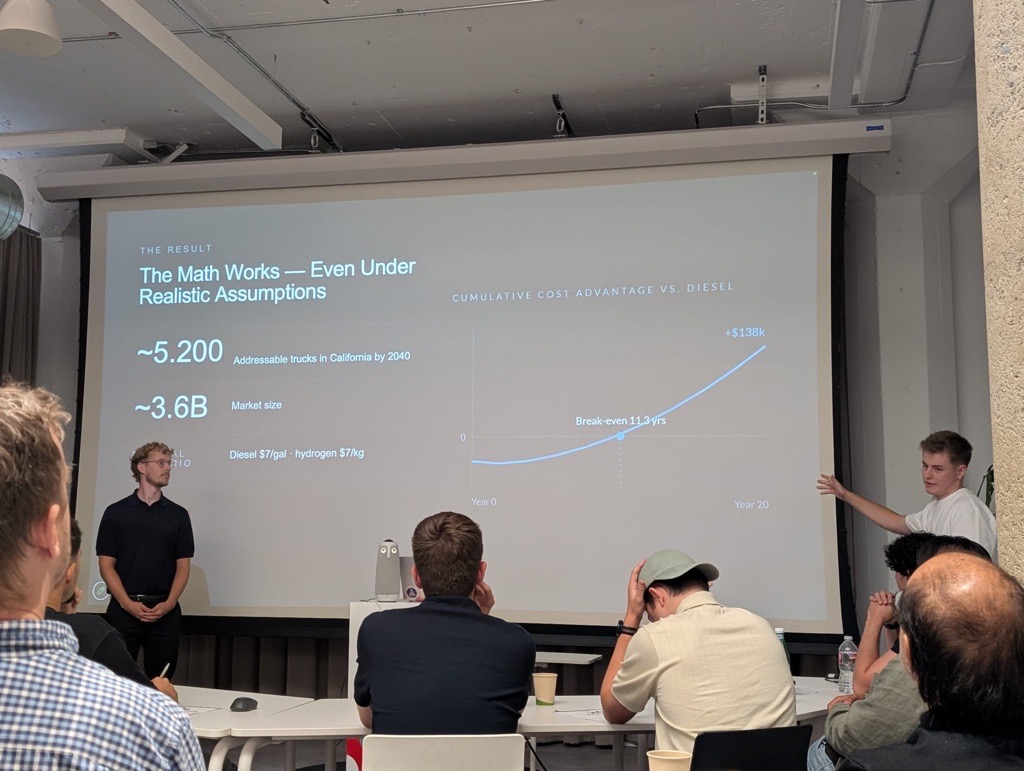
Finalized all deliverables, handed everything over to Carlos and Darlene, and gave our final presentation at Swissnex.
Deliverables
Over six weeks, our work turned into a set of concrete materials for Carlos and Darlene:
Business Plan – A full business plan for the hydrogen fueling and vehicle ecosystem, covering market entry, partnerships, and financials. The foundation for the investor-facing materials below.
Demand Forecast – Projected demand for hydrogen fueling and vehicles across California’s public and municipal fleets, based on the regulatory timeline. Together with the business plan, this fed directly into the pitch and teaser decks.
Pitch & Teaser Decks – Built on the business plan and demand forecast, tailored decks for three audiences — investors, government stakeholders, and fleet buyers — each pitching the same vision through a different lens.
Investor One-Pager – A concise, single-page summary of the opportunity, distilled from the same material to get investors interested fast.
Compliance Guide (internal use) – A practical guide to California’s Advanced Clean Fleets regulation and what it means for fleet purchasing decisions, used internally by the team rather than shared externally.
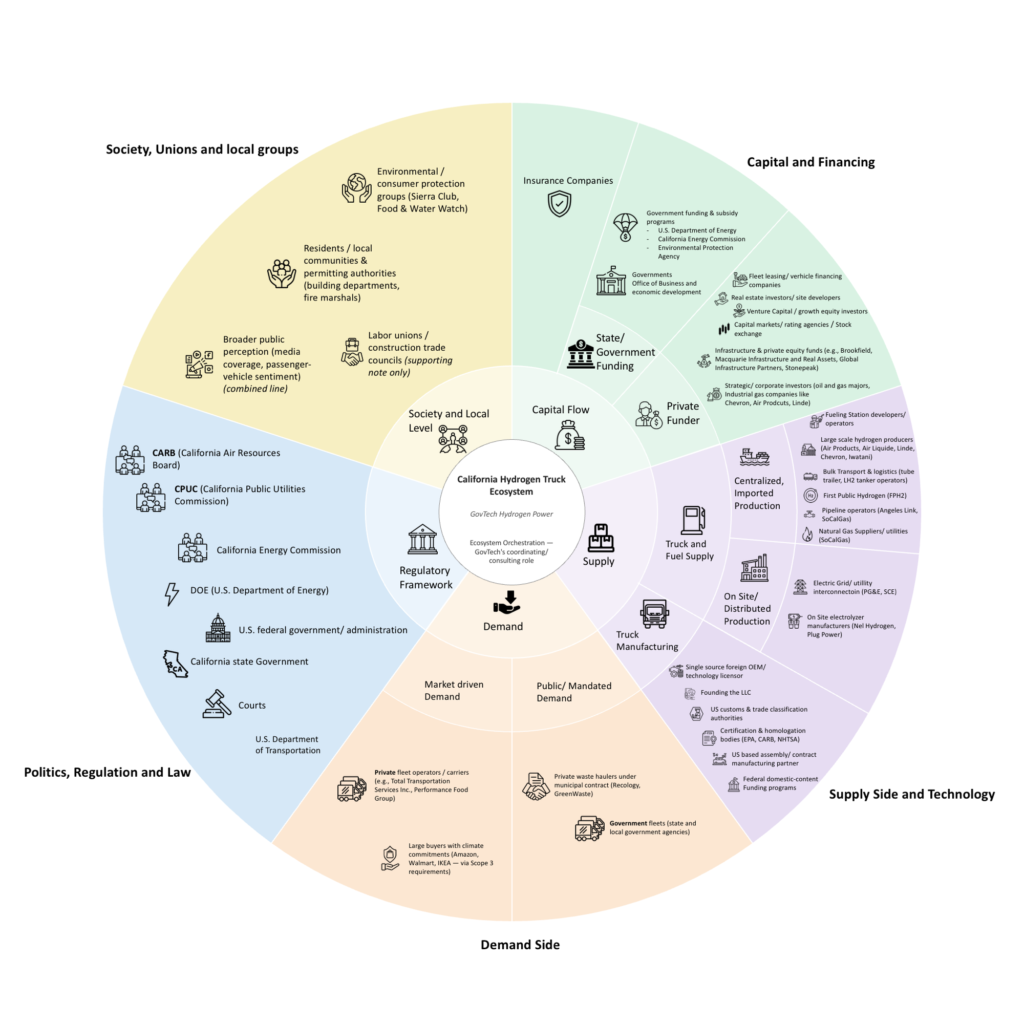
California Hydrogen Ecosystem Graphic – A visual map of every stakeholder that needs to come together for the ecosystem to work, shown in full below.
Ecosystem Map
We built a stakeholder map of California’s hydrogen truck ecosystem, organized into five domains politics and regulation, capital and financing, supply-side and technology, demand-side, and society. Each domain lists the real actors involved, from regulators and government funding programs to fueling-station developers and waste haulers. The map helps us understand the big picture, who needs to move for the ecosystem to work.