
Website & Brand Visibility Optimization (SEO & GEO)
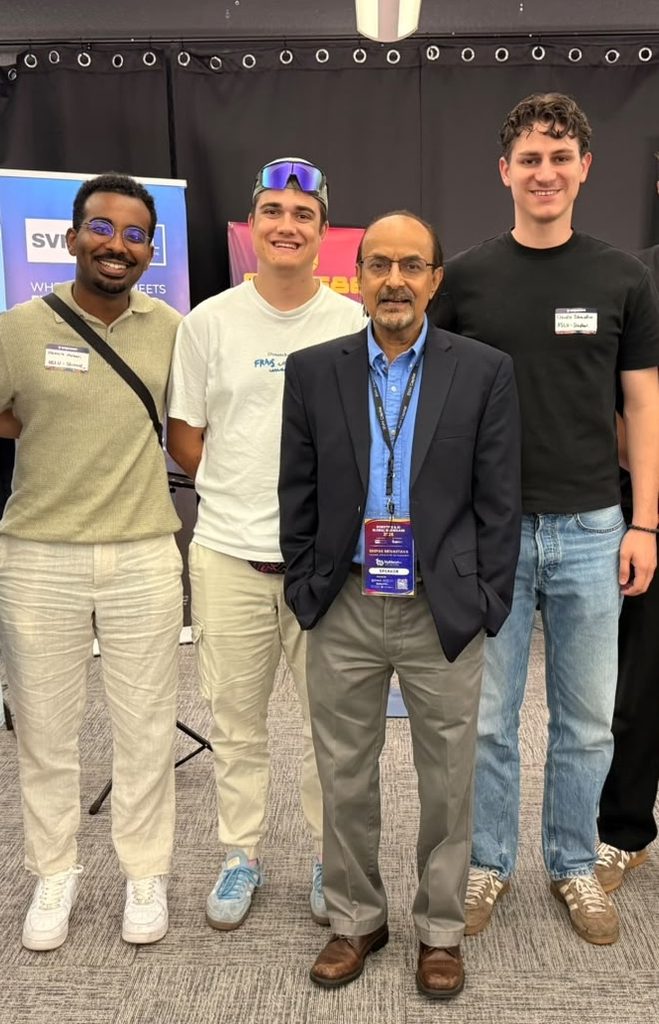
The Team
Claudio Schmidlin, Nicola Willisch and Homere Mehari worked with Dr. Deepak Srivastava, founder and CEO of NuMorph AI Inc., over six weeks in Silicon Valley.
Our project was supervised by Dr. Christian Schucan and Benjamin Emmenegger from Lucerne University of Applied Sciences and Arts (HSLU).
The Project
NuMorph AI develops low-power, low-latency neuromorphic AI solutions for edge applications such as robotics, drones and industrial vision.
Our six-week project focused on improving how NuMorph can be found and understood by both traditional search engines and AI-based systems through Search Engine Optimization (SEO) and Generative Engine Optimization (GEO).
The Starting Point
At project start, numorph.ai had no established SEO or GEO strategy. Our baseline identified the main gaps in content, machine-readable information and external authority, while NuMorph’s visibility in broader non-branded AI searches remained limited.
By the Numbers
- 4 independent website assessments were used to evaluate SEO and GEO readiness.
- 30 questions × 4 LLMs = 120 responses were evaluated across ChatGPT, Gemini, Claude and Perplexity.
- 32.5% overall mention rate was observed in the initial LLM assessment, including direct and indirect mentions.
- 0% mention rate for technical queries showed how difficult it was for NuMorph to appear organically when the company was not explicitly named.
Our Approach
We followed four phases: assess, select, implement and validate. SEO, GEO and monitoring tools were selected through weighted Utility Value Analyses before improvements were implemented and compared against the initial baseline.
The project ultimately included a rebuilt HTML/CSS/JavaScript website, Cloudflare-based crawler access and monitoring, structured data, dedicated SEO/GEO files and expanded website content.
Deliverables
- Final project documentation, including methodology, baseline assessment, tool evaluation and selection, implementation, results, and recommendations
- SEO- and GEO-optimized version of numorph.ai
- Cloudflare-based setup for crawler access, technical delivery, and monitoring
- Markdown-based content maintenance file / pipeline
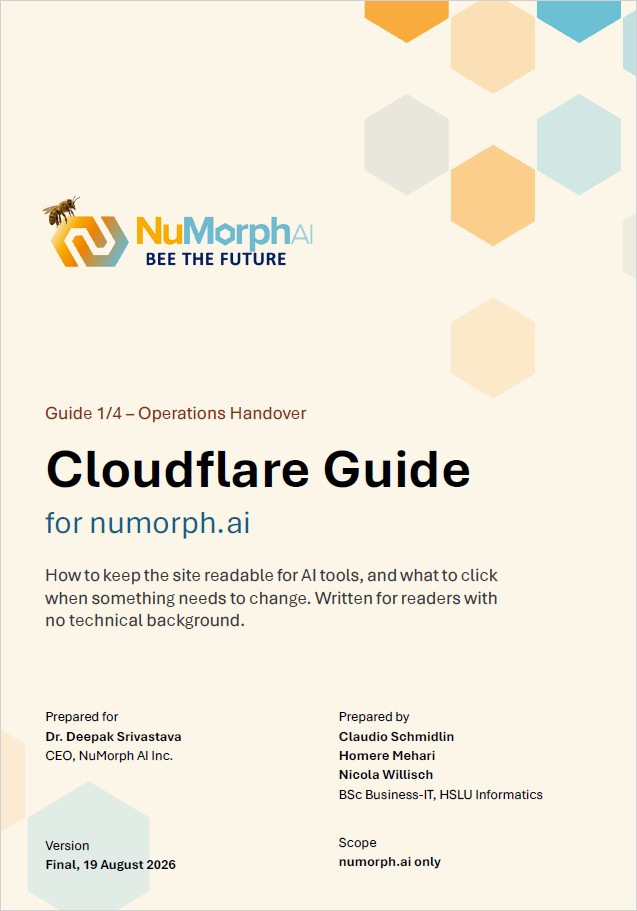
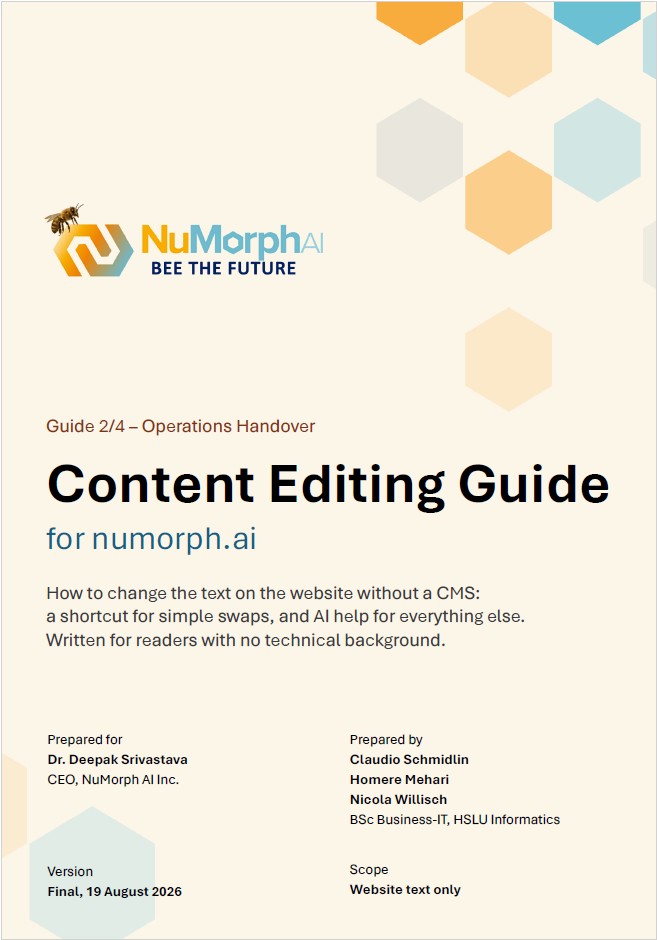
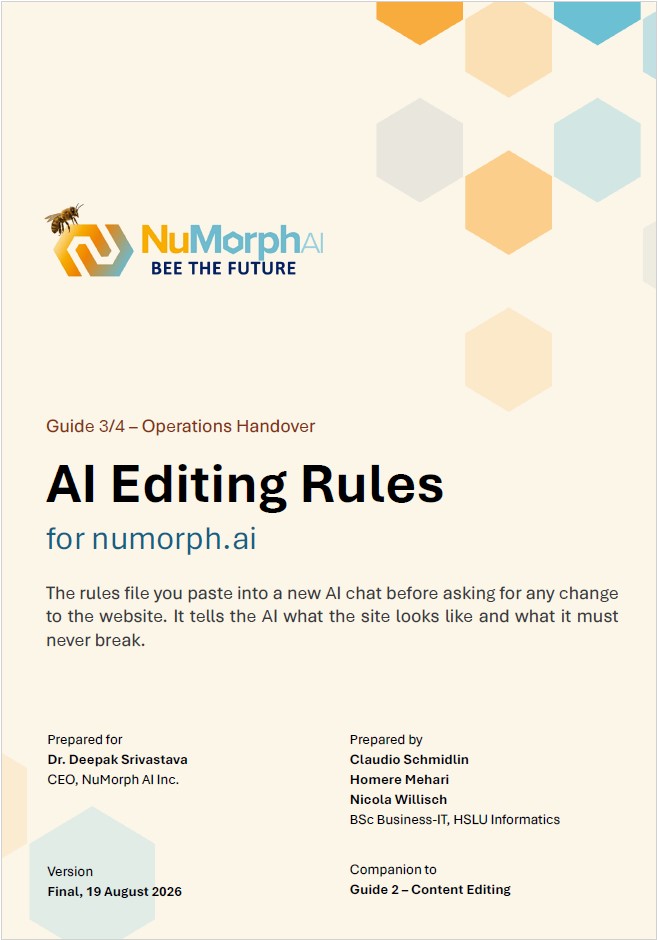
- Four operational handover guides:
– SEO & GEO Check-Up
– Cloudflare Guide
– Content Editing Guide
– AI Editing Rules
Project Log
Week 1 – Understanding the Problem
Project kickoff with NuMorph and definition of the project scope. We established the initial SEO and GEO baseline and identified the main visibility gaps.
Week 2 – Building the Baseline
We evaluated SEO and GEO tools using weighted Utility Value Analyses and started developing the keyword strategy for NuMorph.
Week 3 – Technical Setup
After gaining access to cPanel, we created a separate staging environment and started implementing the optimized website setup.
Week 4 – SEO & GEO Implementation
We implemented SEO improvements, structured data and GEO-related elements such as llms.txt, robots.txt and ai.txt. The monitoring tools were also evaluated.
Week 5 – Integration & Monitoring
We refined the website based on sponsor feedback, implemented clean URLs, integrated the landing page from the parallel NuMorph team and configured the monitoring setup.
Week 6 – Validation & Handover
We completed the final SEO and GEO audit, compared the results with the initial baseline, finalized the documentation and guides, and handed over all project deliverables to NuMorph. The project concluded with the final presentation at Swissnex.
The Experience
Working with an early-stage Silicon Valley startup meant that the project rarely stood still. Technical possibilities changed, requirements evolved and decisions sometimes had to be reconsidered within days. The discovery of cPanel access halfway through the project is probably the best example: it changed both our technical approach and what we could realistically deliver.
That made the project much more than an SEO exercise. We worked across analysis, tool evaluation, web infrastructure, AI discoverability, implementation, monitoring and client handover while applying what we had learned at HSLU to a real company with real constraints.
Beyond the Desk:
TGIF with NuMorph AI
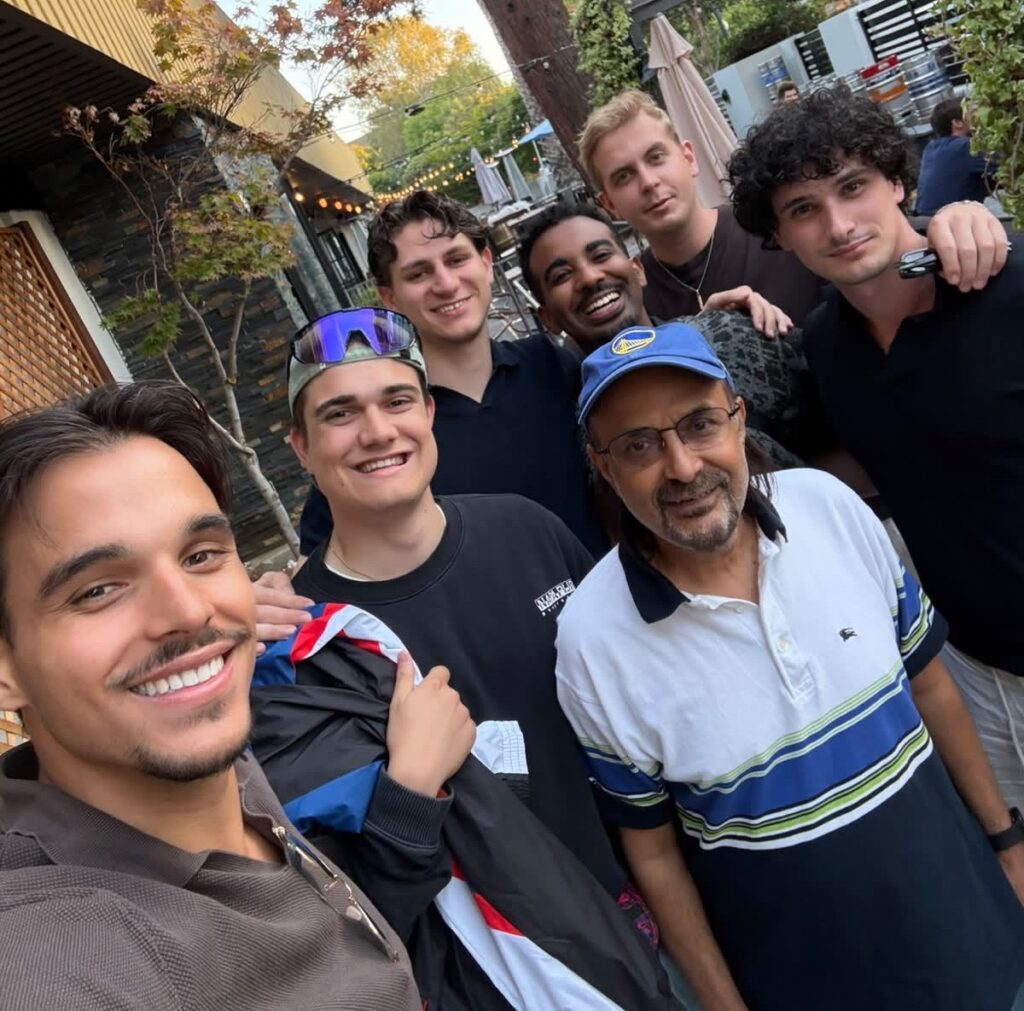
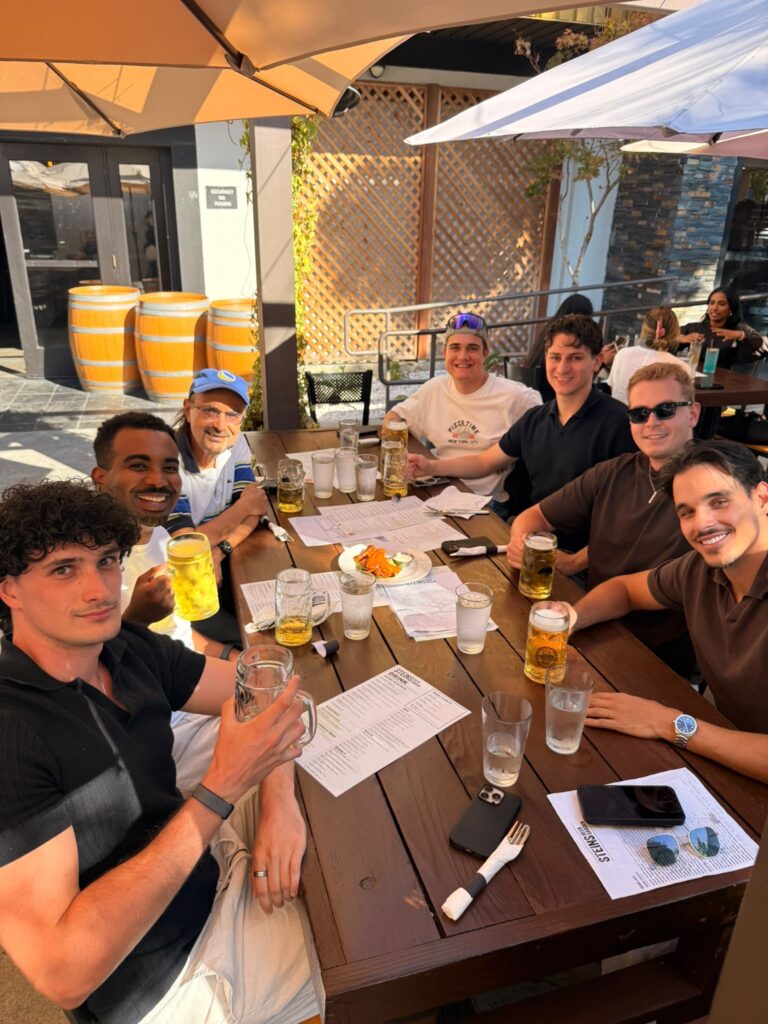
TGIF with NuMorph AI, Silicon Valley, August 2026. Two separate HSLU teams, ours working on SEO and GEO, the other on marketing and the technical whitepaper, both building for NuMorph AI this summer, got together for beer, finger food, and conversations that ranged from Dr. Srivastava’s NASA stories to new business ideas. A good reminder that behind the utility value analyses and cPanel logins, this is still a handful of people building something from scratch.
Client | NuMorph AI Inc.
Project Provider | Dr. Deepak Srivastava, CEO
Duration | Six weeks, July to August 2026
Team | Claudio Schmidlin, Nicola Willisch, Homere Mehari
Supervision | Dr. Christian Schucan & Benjamin Emmenegger HSLU
Location | Silicon Valley, California